Start here
Taishū engeki without Japanese
Whether the Asakusa troupe stage works with no Japanese: the play, the dance revue, the English briefing option, tipping, who should skip it and how long.
Find a performance day ↗Quick answer
Yes, for most visitors who come for the spectacle. Taishū engeki is Japan's popular theatre: a family troupe plays a short drama in Japanese, often a period piece with a sword fight, then dances solo numbers in kimono and stage make-up, with young men in female roles. The dances need no words. The guided ticket adds an English briefing; the show-only seat does not. Bring cash for tips and snacks, allow up to two hours, and leave under-tens at home.
The performance in one table
| This ticket | |
|---|---|
| Length | 1.5 to 2 hours |
| On stage | Japanese only |
| English | Guided option briefing |
| Programme | Changes daily |
| Tips and snacks | Cash only |
| Under-tens | Not admitted |
| Wheelchairs | Not suitable |
| Free to cancel | Up to 24 hours ahead |
The short verdict
Go if you like the idea of sitting in a small local theatre while a troupe performs for its fans, and if loud music, glitter and the odd puff of stage smoke sound like fun rather than a trial. Skip it if you want to follow a story line by line, need step-free access, or are travelling with young children. Taishū engeki is not designed for tourists, which is exactly its appeal: you are watching the show its own audience comes back for, in a small theatre where the performers walk among the seats. A show-only seat costs little, the guided option a little more, so the gamble is small either way.
What taishū engeki is
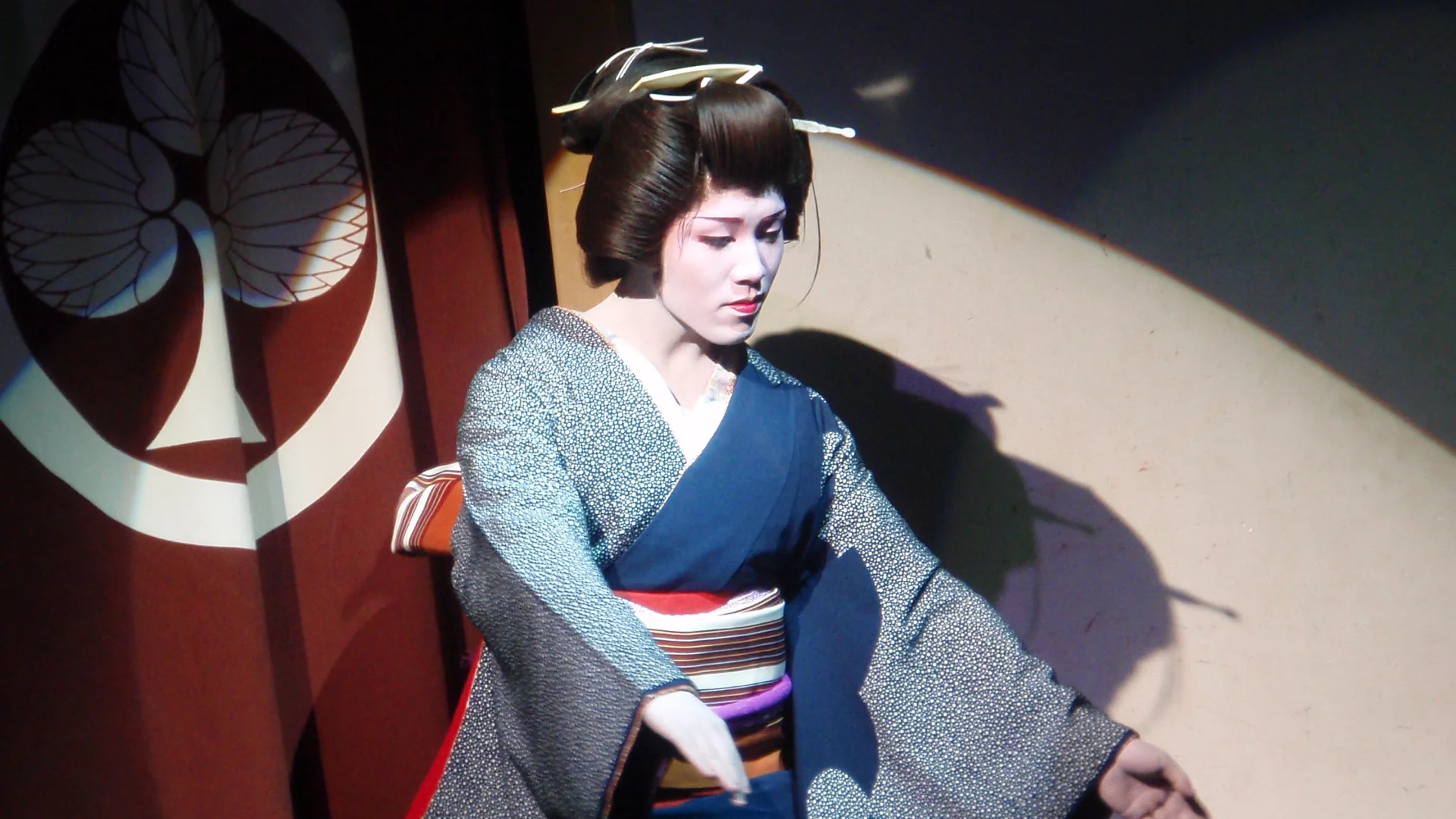
The name means theatre of, or for, the masses. Wikipedia describes it as a genre of popular theatre often called light theatre and compared with musical theatre and the revue. The term arose to set it apart from kabuki, bunraku and Noh, forms that began as popular entertainment but now carry the weight of high culture. Taishū engeki makes no such claim. Troupes are not tied to one house; they travel between small local theatres and community halls, keep ticket prices low, and work hard at a feeling of closeness between stage and audience. Some people inside the form even dislike the word taishū, the masses, though the name has stuck.
How a programme is built
Performances usually come in two parts. First a short play involves most of the troupe, often set in the Edo period, mixing human-interest plots with sword fights and samurai themes. Then comes a series of dance numbers unconnected to the play, each performer alone on stage in a traditional-style kimono and heavy make-up, dancing to enka, Japan's sentimental ballad music, while fog machines and lighting effects add the flash. The Asakusa troupes mix fan dances, swordplay, traditional dance, dramatic scenes and comedy, and the bill changes every day. Because each troupe builds its own bill, two visits a week apart can feel like two different shows.
Why the Japanese matters less than you think
The play is the only part where the words carry the story, and even there the shape is often easy to read from the stage: period dramas lean on costume, gesture and stock types, and the sword fights need no translation. The second half, the dance revue, is pure performance. A visitor who misses every line of dialogue still gets the onnagata, the quick costume changes, the fan work and the crowd's reactions, which are a show in themselves. If you want the plot, arrive with the guided option's briefing in your head.
The guided option, and the show-only seat
The booking page sells two tickets. The show-only seat covers one full performance of up to 90 minutes and the chance to photograph the cast and pose with them. The guided programme costs more and adds a short explanation of the show from English-speaking theatre staff, a canned drink, a guided go at the tipping custom and, when it is available, special permission to film during the show. For a first visit with no Japanese, the briefing is the difference between watching something strange and understanding what you are watching.
Read next: How the tipping custom works
Onnagata, and why they get the applause
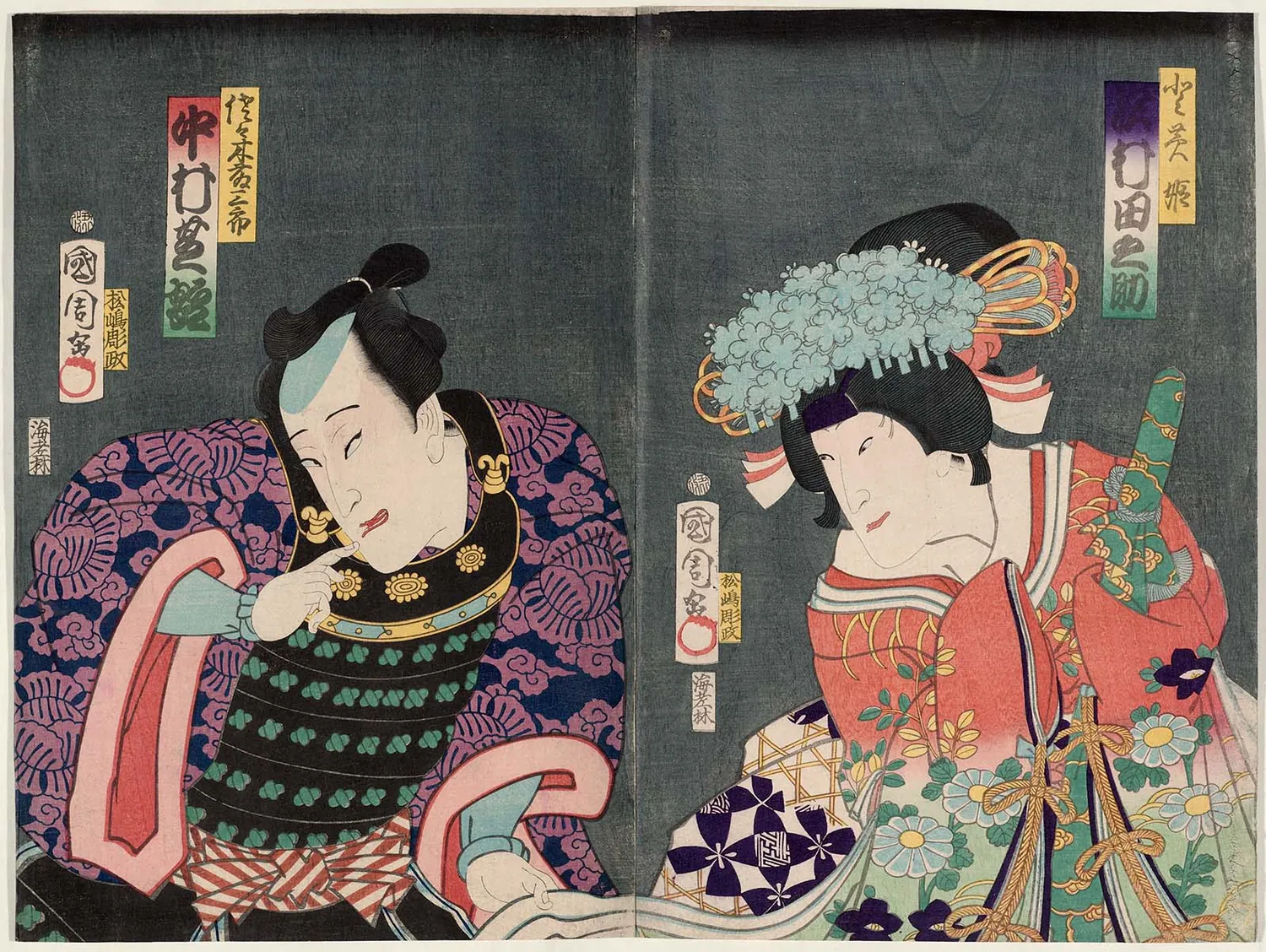
Onnagata, men who play women, entered kabuki after women were banned from its stages in 1629. Taishū engeki troupes include actors of both sexes, yet young men frequently take the female parts, while the reverse is rare. Make-up follows kabuki's lead: porcelain-white faces, bright red lips and strongly drawn eyes and brows, aiming at an unreal, stylised beauty. Watch how a dancer carries the sleeves and turns the head; that control is what the regulars are applauding.
Read next: Onnagata on the popular stage
The tipping custom, in brief
During the dances, fans approach the stage, the performer kneels at its edge, and the fan slips a letter, an envelope or a folded note into the kimono or the obi, often with a handshake and a word. Wikipedia calls the custom go-shūgi, congratulations. Visitors are invited to join in, and the guided programme walks you through it. Bring cash in small notes, because tips and the snack bar take nothing else.
How close the performers come
The form is built on closeness. In this theatre the performers often come down from the stage and walk among the audience, and taishū engeki troupes in general sell DVDs, calendars and photo books in the aisles during the interval, then gather outside after the show to greet fans and pose for photographs. Your ticket includes a chance to take commemorative photos of the performers and with them. Keep the flash off for the whole performance and the photo moment, and ask staff if you are unsure when it is.
Length, timing and the snack bar
Set aside up to two hours, door to door. Two performances a day are usual, and your booking shows which you have. Because the programme is rebuilt every day, the curtain can go up as much as fifteen minutes earlier or later than printed, so arrive in good time. Before the start a snack bar sells small snacks and refreshments for cash. Eating and drinking in your seat is normal at taishū engeki, though red wine and alcohol are on the not-allowed list.
Who this isn't for
If any of those describes your group, the comparison guide here lays out a quieter Asakusa hour that suits families and wheelchair users. Everyone else should go in knowing the show is loud, close and unpolished in places, with smoke drifting from the stage and the bill decided by the troupe on the day. Its fans would say that is exactly the point, and that a perfectly predictable afternoon belongs somewhere else.
- Children under ten and babies, who are not admitted
- Wheelchair users, for whom the show is not suitable
- Anyone with asthma or breathing problems, because of smoke effects and performers smoking on stage
- People with epilepsy, because of flashing lights
- Visitors who need a plot they can follow word by word
Read next: Troupe show or a craft hour?
Booking, cancelling and finding the door
Open the date picker here and select the show-only seat or the guided programme; for a first visit without Japanese, the guided programme is the better buy. Paying can wait, and cancelling costs nothing until a day before the curtain. On the day, check that your map pin names the theatre you booked, because another theatre shares the address. The entrance is a staircase on a street corner, and a greeter with a meeting-point sign or a receptionist on the second floor will direct you.
Read next: Finding the upstairs theatre
Frequently asked questions
Will I understand anything?
More than you expect. The play is in Japanese, but its shape is easy to read, and the dance half needs no language. The guided programme's English briefing explains the show before it starts.
Is it like kabuki?
It borrows kabuki's make-up, costume and onnagata tradition, but it is popular theatre: cheaper, informal, louder, with family troupes who walk among the audience and take tips mid-dance.
Do I have to tip?
No. Tipping is a custom you may join, not a charge. If you want to, carry a few low-value banknotes; the guided programme shows you how it is done.
Can children come?
Not under ten, and babies are not admitted either. Older children who cope with loud music, flashing lights and stage smoke usually find the costumes and sword fights easy to enjoy.
Is the show accessible?
Wheelchair users are advised not to book, and the theatre is reached up a staircase. People with respiratory problems or epilepsy should also not book.
Sources